Robotic Cutting
Semtex Trenchless Solutions provides specialist IMS robotic cutting and milling services for residential, commercial, industrial and municipal wastewater, stormwater, drainage and process pipeline systems.
Robotic cutting allows hardened obstructions, protrusions and defective materials to be removed from inside a pipeline without excavation. The cutter is remotely controlled from above ground, with an integrated CCTV camera allowing the operator to accurately position and monitor the cutting head throughout the work.
Our robotic cutting capability generally covers pipelines from approximately DN100 to DN800, depending on pipe diameter, access, condition, bends, obstruction type and the equipment configuration required.
Our capabilities include:
Reopening lateral connections following CIPP pipe lining
Cutting protruding or intruding pipe connections
Removal of concrete and grout
Root cutting and removal
Removal of scale and hardened deposits
Cutting and removing failed liners
Internal grinding and milling
Trimming liner ends
Preparing defects before localised repairs
Removing internal pipe obstructions
Cutting out defective patches or repair materials
Localised pipe preparation before relining
Removal of construction debris
Precision cutting in confined or inaccessible pipelines
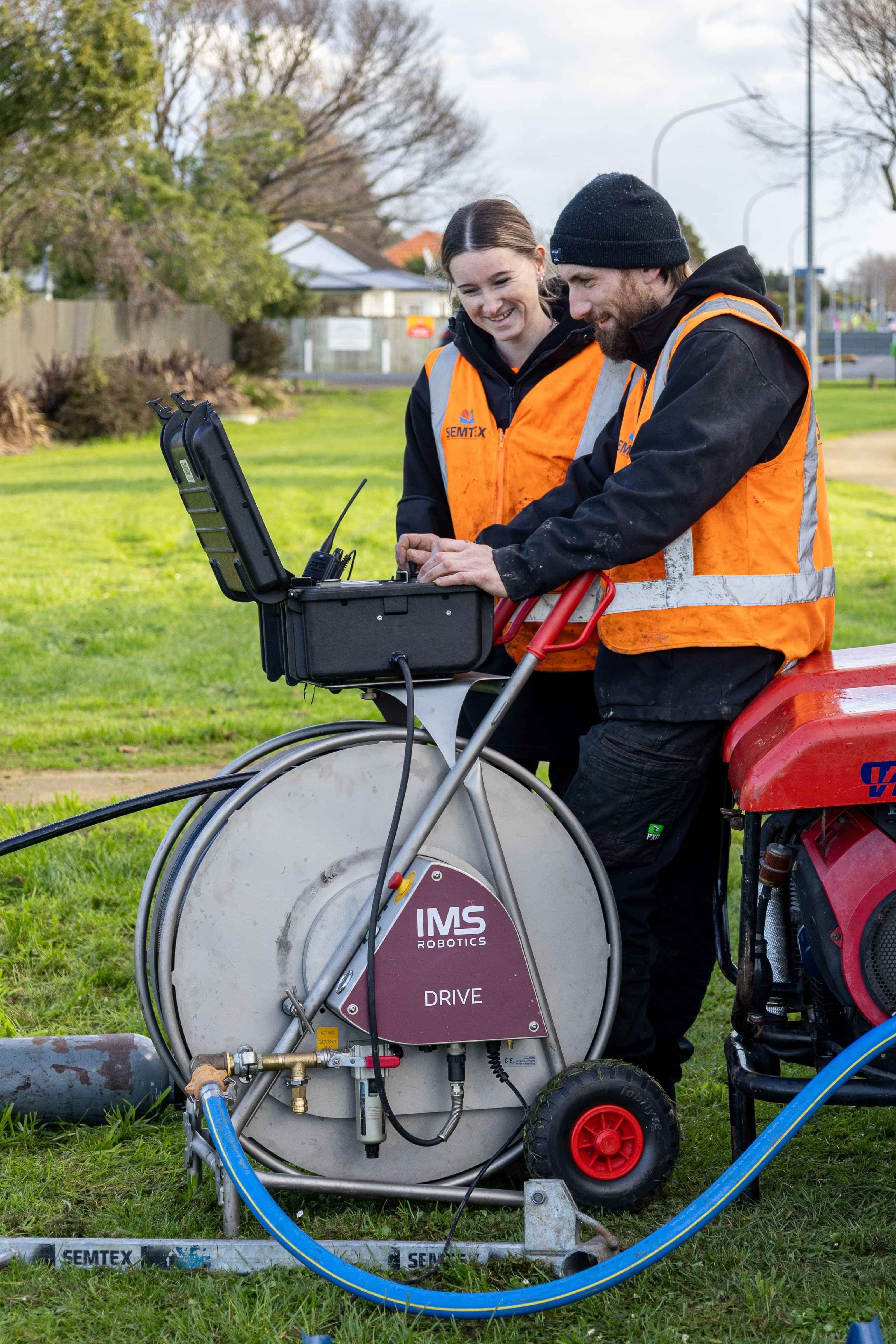
We operate specialist IMS robotic cutting systems, including the IMS Drive and IMS Micro S Light, allowing us to complete work across a range of pipe diameters and access conditions.
The IMS Drive is used for larger mainline wastewater, stormwater and infrastructure pipelines, while the compact IMS Micro S Light is suited to smaller-diameter pipes, laterals and restricted-access locations.

Lateral connection reopening
After a mainline CIPP liner has been installed, existing lateral connections are temporarily covered by the new liner.
Using recorded pre-lining CCTV information and internal camera guidance, the robotic cutter is positioned at the lateral connection and used to carefully reopen the connection from inside the rehabilitated mainline.
The opening is progressively cut and finished to restore flow while protecting the new liner and the existing lateral pipe.
Where required, the connection may then be sealed or rehabilitated using a tophat junction liner or another suitable lateral repair system.
Obstruction removal
Robotic cutters can remove hard internal obstructions that cannot be effectively cleared using conventional water jetting alone.
These may include:
Concrete
Grout
Intruding lateral pipes
Hardened scale
Mineral deposits
Roots
Steel or plastic protrusions
Failed patch liners
Folded or damaged CIPP material
Excess resin
Construction debris
Foreign objects
The cutting tool is selected to suit the obstruction, host pipe material and required finish. Available tools may include carbide cutters, grinding heads, milling tools, cutting discs and specialist root-cutting attachments.
Remote-controlled operation
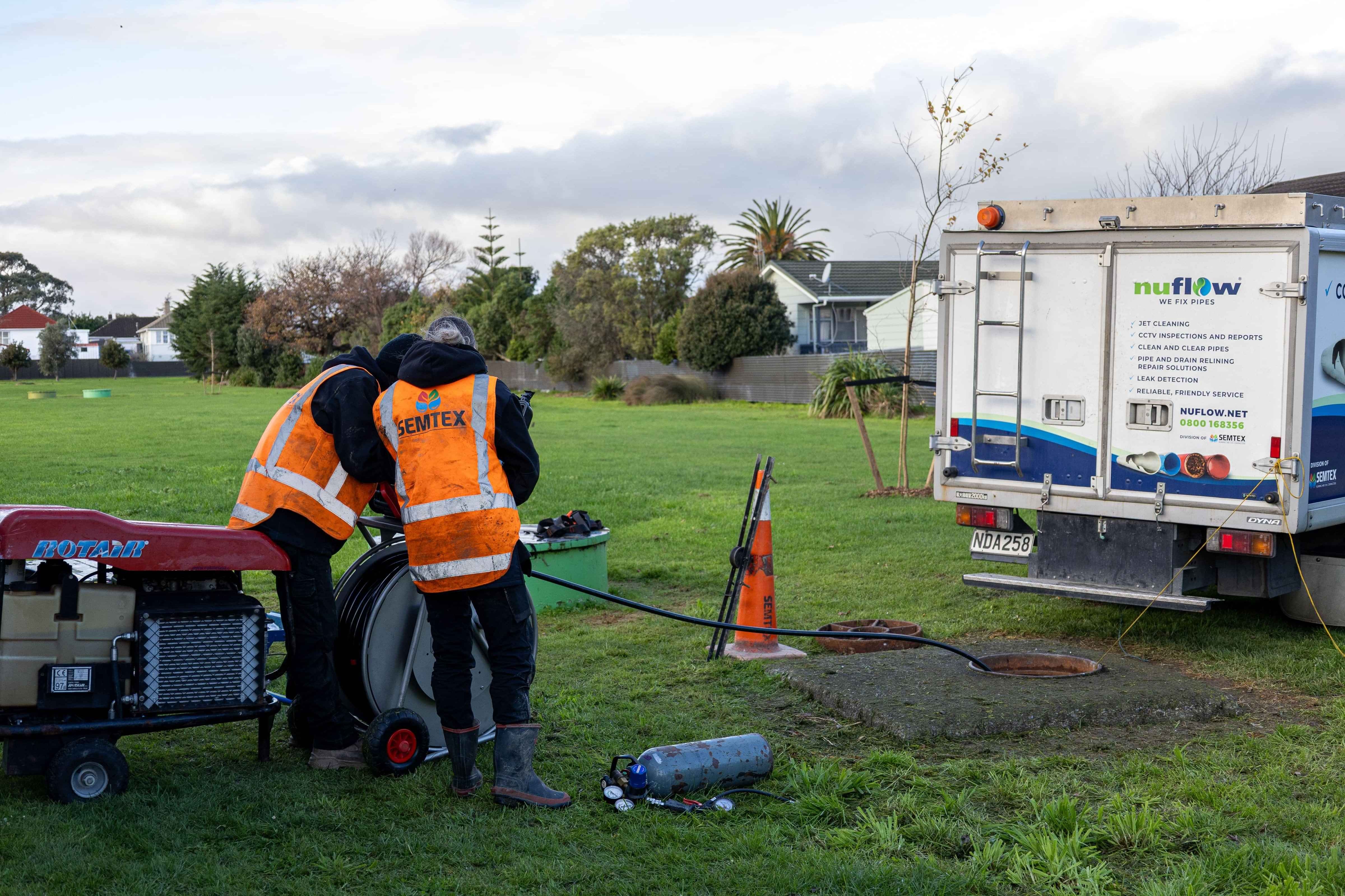
The robotic cutter is operated remotely from a specialist control unit outside the pipeline.
The operator uses live CCTV footage to monitor the cutting head and pipe wall during the work. The cutter can be moved, rotated and positioned to complete controlled cutting, milling and grinding.
Different wheel sets, cutting tools, camera configurations and stabilising systems can be used depending on pipe diameter and internal conditions.
This approach reduces the need for excavation and, in many cases, eliminates the need for personnel to enter the pipeline.
Pre-relining pipe preparation
Robotic cutting is often used as part of the preparation process before CIPP, patch lining or spray-applied rehabilitation.
Protruding connections, hardened deposits, failed repairs and sharp obstructions must be removed so the new liner can be installed evenly against the host pipe.
Correct preparation helps:
Reduce the risk of liner damage
Prevent localised restrictions
Improve liner fit
Maintain the available internal diameter
Improve the quality of the finished rehabilitation
Reduce the risk of installation defects
Following preparation, a CCTV inspection is completed to verify the pipe condition and confirm readiness for the selected rehabilitation system.
Typical applications:
Reopening laterals after CIPP lining
Removing protruding lateral connections
Concrete and grout removal
Root removal
Failed liner removal
Internal pipe grinding
Pre-relining preparation
Localised defect preparation
Wastewater and stormwater main rehabilitation
Residential and commercial drain repairs
Industrial and process pipeline maintenance
Council and infrastructure projects
Pipelines located beneath roads, buildings or operational facilities
ACCREDITED BY


CONTACT
58 West Street, Palmerston North
0800 4 SEMTEX
info@semtex.co.nz
OPENING HOURS
Mon-Fri 9-5pm