CIPP Pipe Lining
Semtex Trenchless Solutions provides cured-in-place pipe (CIPP) lining for residential, commercial, industrial and council wastewater, stormwater, drainage, culvert and process pipeline systems.
CIPP is a trenchless rehabilitation method that creates a new pipe within the existing host pipe. A resin-impregnated liner is installed through an existing access point, expanded against the host pipe and cured to form a continuous, jointless liner with minimal excavation.
We install a range of CIPP systems, including UV-cured glass-reinforced plastic (UV-GRP) liners, felt liners, localised patch liners and UV-LED repair systems. The selected system is based on the pipe diameter, shape, material, condition, loading, access, service environment and required design life.
Our capabilities include:
Full-length CIPP rehabilitation
UV-cured GRP structural liners
Felt and composite CIPP liners
Localised patch and short-liner repairs
UV-LED cured localised repairs
Circular and selected non-circular pipeline profiles
Wastewater, stormwater, culvert and industrial applications
Pre-installation cleaning and robotic preparation
Lateral connection reopening
Tophat junction repairs and liner end sealing
Pre- and post-installation CCTV
Digital curing and quality-assurance records
UV-GRP pipe lining
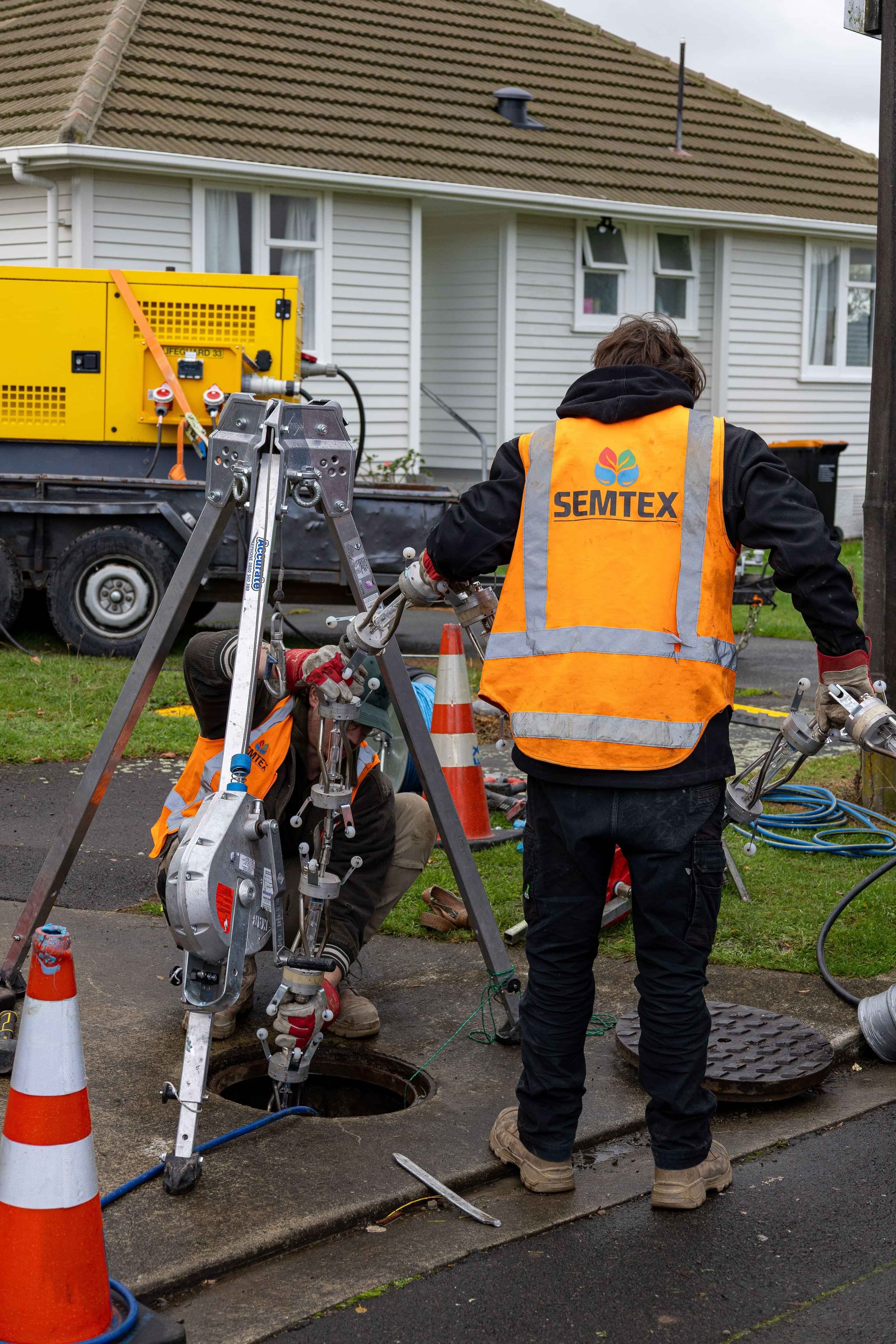
For larger gravity pipelines, we use UV-cured glass-reinforced liners installed and cured using specialist ProKASRO UV equipment. UV-GRP liners provide high structural performance with controlled factory impregnation, relatively thin wall sections and a smooth internal finish.
Our UV curing capability generally covers approximately DN150 to DN1500, subject to liner design, pipe geometry, access and installation conditions. The liner is inflated against the host pipe and cured by moving a controlled UV light train through the installation at the specified speed and lamp output.
Small-diameter UV and localised lining 2
For smaller drains and localised defects, we can install felt, glass-fibre and UV-LED cured repair liners. Our compact UV-LED systems are suitable for selected repairs in approximately DN100 to DN225 pipelines, including short liners, patch repairs and lateral junction rehabilitation.
Structural design
Where structural rehabilitation is required, the liner is designed for the specific asset. Design inputs may include pipe diameter and shape, host-pipe condition, depth, groundwater, soil and traffic loading, ovality, internal pressure where applicable, material properties and required design life.
Depending on the project, the liner may be designed as fully structural, semi-structural or non-structural. Specialist design is completed using recognised engineering methods, manufacturer design software and project-specific information.
UV-GRP pipe lining
For larger gravity pipelines, we use UV-cured glass-reinforced liners installed and cured using specialist ProKASRO UV equipment. UV-GRP liners provide high structural performance with controlled factory impregnation, relatively thin wall sections and a smooth internal finish.
Our UV curing capability generally covers approximately DN150 to DN1500, subject to liner design, pipe geometry, access and installation conditions. The liner is inflated against the host pipe and cured by moving a controlled UV light train through the installation at the specified speed and lamp output.
Small-diameter UV and localised lining 2
For smaller drains and localised defects, we can install felt, glass-fibre and UV-LED cured repair liners. Our compact UV-LED systems are suitable for selected repairs in approximately DN100 to DN225 pipelines, including short liners, patch repairs and lateral junction rehabilitation.
Structural design
Where structural rehabilitation is required, the liner is designed for the specific asset. Design inputs may include pipe diameter and shape, host-pipe condition, depth, groundwater, soil and traffic loading, ovality, internal pressure where applicable, material properties and required design life.
Depending on the project, the liner may be designed as fully structural, semi-structural or non-structural. Specialist design is completed using recognised engineering methods, manufacturer design software and project-specific information.
Typical applications:
Cracked, fractured or leaking wastewater pipes
Stormwater mains and culverts
Root-affected drainage systems
Corroded or deteriorated pipelines
Brick barrels and non-standard profiles
Pipelines beneath roads, buildings and operational sites
Industrial and process pipelines
Assets where excavation would be disruptive, costly or impractical
ACCREDITED BY




CONTACT
58 West Street, Palmerston North
0800 4 SEMTEX
info@semtex.co.nz
OPENING HOURS
Mon-Fri 9-5pm